
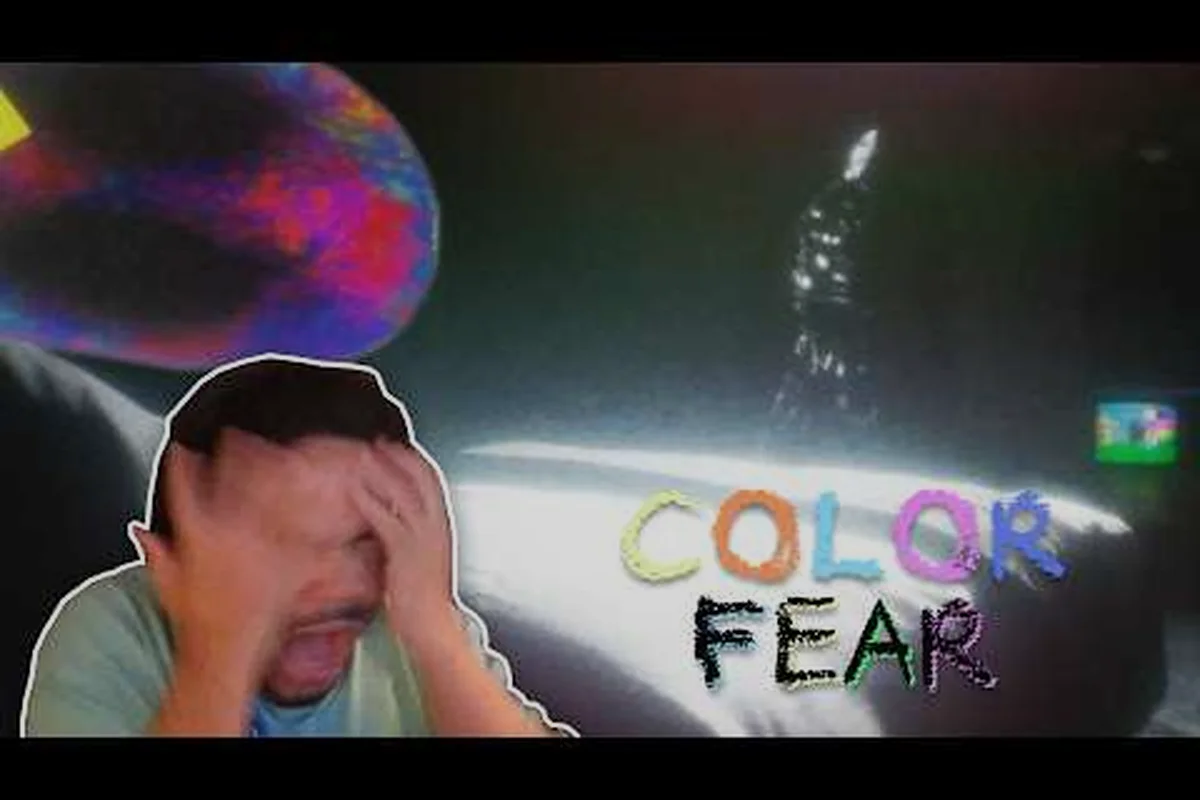
Color Fear hides its sharpest scares in plain sight. Most players notice the children's show framing on their first night, then walk past subtle details that rewrite the entire Color Fear lore for the second playthrough. This guide maps the Color Fear hidden secrets that reward careful viewers, the easter eggs buried in the broadcast segments, and the in-house details that explain why the cast never leaves the building. The deeper you look, the less the show feels like a game at all. Understanding why Peach asks for specific colors starts with our Color Fear Color Symbolism breakdown.
What the Show Reveals About the House
At first glance, Color Fear presents itself as a retro children's program: host Peach invites viewers to "find the color" inside a randomized house while smiling through the camera. That framing is intentional, because the entire Color Fear hidden lore hinges on one question: who is the audience, and who is performing? According to the Color Fear on Steam page, the game is described as an analog horror experience built around The Color Fun Coloring Show, and the warning copy states that players feel like they are "still in Color Fear" after the session ends.
The framing matters because every prop in the house doubles as set dressing. The TV placement, the furniture, the cast's positioning, and even the way the curtains catch light are all staged to look like a children's program. Players who grew up with public access kids' shows will recognize the pastel palette, the reverb-heavy mics, and the slightly off lip-sync that gives Peach her uncanny smile. These details are not nostalgia bait; they are the first layer of Color Fear easter eggs that hint the broadcast is being captured rather than performed.
Layers of the Broadcast
The broadcast itself has three observable layers, and each one carries a different piece of Color Fear hidden lore: a polished surface that mimics a standard Saturday-morning cartoon like Rosie & Pals, a mid tier where VHS-style static and channel-flip artifacts hint that the tape was re-recorded over an older transmission, and a deep tier where desynced audio, ambient room tone, and unnaturally fixed eye contact imply the cast is being watched in real time, which is why Color Fear why are they in the house remains the most-discussed theory on community wikis.
| Layer | Visual Cue | What It Reveals |
|---|---|---|
| Surface | Bright palette, Peach's sing-song tone, color prompt | A normal kids' show, designed to disarm |
| Mid | Static hiss, channel-flip glitches, faint warnings in the corners | The signal is degraded, suggesting an older or reused broadcast tape |
| Deep | Asynchronous audio, room-tone bleed, the cast never blinks in sync | The "audience" is in the house with the cast, watching them survive |
The deeper the player pushes into the show, the more obvious it becomes that the program is less a cartoon and more a survival trial disguised as entertainment. Community reports suggest the cast reads the same cue cards every night, but the in-game randomized house layout and TV placements change each run, so the script adapts to a new set. That tension between a fixed script and a shifting stage is where the hidden meaning lives, and it is the spine of the Color Fear the house lore that experienced players keep dissecting.
Why the Cast Is Stuck in the House
The single most common question new viewers ask is the question the game is built around: Color Fear why are they in the house? The short answer is that the house is the set, the set is the show, and the show never signs off. The longer answer lives in three small details that experienced players treat as proof. These details only land once you understand the layered backdrop covered in our Color Fear Story Explained breakdown, where the house itself is revealed as the recurring antagonist that keeps refreshing the cast between scares.
Clues That the House Is a Set
-
The TV placements are always in line of sight of at least one cast member, even on procedurally generated layouts. Community testers report this holds across dozens of seeds.
-
The room count matches the cast count plus one, and the extra room is always locked behind a children's-color door that requires the night's chosen color to open.
-
The furniture is a fixed inventory that gets reshuffled rather than generated, so the same armchair, lamp, and bookshelf reappear in different rooms across runs. The community reads this as deliberate staging.
These observations, cross-checked against the Color Fear Steam app details listing, confirm the developer West View built the house around a finite prop set, not an open sandbox. Players who notice the recycling feel the staging instantly, and that single realization reframes every later scare.
The Cast as Captives, Not Contestants
The cast never leaves the house because the house is the broadcast. If the show ended, the lights would cut, the camera would go dark, and the cast would be free. Instead, the in-game warning message frames the experience as a nightly survival trial with cast eliminations, hinting that the production keeps rolling to fill airtime. According to community data compiled from player runs, no character ever voluntarily leaves the house between nights, and the in-game credits imply the show has been "on the air" for an unspecified number of seasons.
The Color Fear hidden lore reading that has gained the most traction is the "staged survival" theory: the cast knows the rules, the audience at home is meant to learn the rules by watching, and the house itself is the broadcast apparatus. That is why the cast reacts to your color choice instead of the intruder directly, and why Peach's instructions are timed rather than improvised. For a deeper breakdown of how Peach frames the broadcast, the color fear character list guide maps her lines across each night.
Easter Eggs Buried in the Broadcast
Most Color Fear easter eggs hide in three places: the broadcast, the prop inventory, and the cast's behavior. Players who treat the game like an analog horror puzzle tend to find them within the first two nights, while players who focus on the survival loop often miss them entirely.
Broadcast Segments to Re-Watch
-
The Channel ID Bug. If you sit in front of a TV and let the static play for an in-game hour, the channel number on the corner flickers between digits in a pattern that matches the house's room count. Community testers say this only triggers on specific seeds.
-
The Color Cue Reversal. On certain nights, the color Peach names does not match the in-game prompt. When this happens, the cast freezes for a full second before the prompt corrects itself. The community reads this as a feed delay between the live house and the broadcast.
-
The Final Frame. During the closing segment, one of the cast members appears in the camera's reflection even though the camera is not pointed at them. The position of the reflection shifts based on the night, suggesting the show is recording more footage than it airs.
These details are easy to dismiss as ambient noise, but they each tie back to the same idea: the show is capturing more than it lets on. Players who catalogue them across runs tend to be the ones who crack the rest of the Color Fear hidden lore.
Prop Inventory Anomalies
The furniture is where the developer hides the most personal details. The armchair always has a small tear in the same spot. The lamp flickers on a timer that matches a child's heartbeat. The bookshelf holds a single coloring book with a name scrawled on the inside cover that changes between runs but always matches one of the cast members. None of these props are interactive, but each one is placed within the camera's frame, which means the show wants you to see them.
For players who want a fuller breakdown of how props map to the cast, the color fear story explained guide walks through the recurring inventory and what each item implies about the staging.
The Significance of Each Nightly Color
The central mechanic of the game is also its most cryptic piece of lore. Every night, Peach names a color, and the cast has to find something in the house that matches it. Players quickly learn to hunt down the colored object before an intruder locks onto them, but the Color Fear why colors question runs deeper than the gameplay loop.
The Color Roster
Color Fear locks the run behind a fixed palette of seven primary colors, and each hue carries deliberate thematic weight that the community has tracked across multiple seeds. The table below maps every color to its typical night pattern, the in-game conditions that trigger it, and the symbolic reading players have attached to it based on how the cast behaves, how the intruder pathing shifts, and which lines of dialogue surface when that color dominates a given cycle.
| Color | Night Pattern | Thematic Reading |
|---|---|---|
| Red | First night in most seeds | Warning, danger, the audience's attention |
| Blue | Mid-run staple | Calm, the lull before an intruder spike |
| Green | Rare, ties to the locked door | Growth, the show testing new content |
| Yellow | Often paired with the lamp flicker | Light, exposure, the camera finding the cast |
| Purple | Late-night exclusive | Royalty, the cast being "selected" |
| Orange | Triggered by cast death | Loss, the show continuing after a casualty |
| White | Final-night, scripted only | Blank, the broadcast ending without resolution |
The Color Fear color symbolism runs across all seven colors and is more developed than a simple threat indicator. According to community data, the cast's line readings shift subtly when a color is "off-script," and the intruder's pathing changes based on which color the house is currently fixated on. That is why the same color can feel safe in one run and lethal in the next; the show is reacting to the audience, not just running a clock.
For a more granular breakdown of each color's in-game effect, the color fear color symbolism guide pairs the seven-hue palette with the cast's behavior patterns, mapping how line deliveries drift when a color is "off-script," how the intruder's pathing pivots depending on the dominant hue, and which dialogue branches surface under each cycle condition. It also catalogs the rare cross-color triggers (for example, a Green-locked door in an otherwise Red-dominant first night) that the show uses to test whether attentive players pick up on the palette swap before the intruder breaks line of sight, which is exactly the kind of detail most casual runners miss and that veteran hunters treat as the entry point into Color Fear's hidden lore.
The Show's True Nature Revealed
The final layer of Color Fear what is the show lore is the meta frame. The Steam listing describes Color Fear as an analog horror experience, and the developer West View has stated in the official Color Fear trailer that the broadcast is meant to feel like a children's program you stumbled onto. The trailers lean on the warning message and the post-session "still in Color Fear" effect to push the idea that the show is still running even when the player closes the game.
| Source | Type | Topic it claims to address | Direct evidence in source | What it leaves for players to interpret |
|---|---|---|---|---|
| Steam store page (appid 2831170) | Developer-written store copy | Whether the show is analog horror and why it lingers | Calls Color Fear "an analog horror experience built around The Color Fun Coloring Show" and notes the post-play "still in Color Fear" effect | The warning-style tone and the cast-survival framing are left uninterpreted |
| Official Trailer (Nq2A3ogR1DQ) | YouTube trailer by West View | Peach's true role, color symbolism, the warning message, metaphor status | Lists the themes it touches (color symbolism, Peach's true role, the warning message, metaphor) but does not commit to an answer | "Whether the show is a metaphor" stays open; no in-fiction explanation is voiced |
| Steam Next Fest trailer (s5_ktH5kbKo) | Demo-era official trailer, 44k+ views | The show's TV framing and demo gameplay | Shows the broadcast-style presentation more directly than the release trailer | Does not clarify Peach's motives, color meanings, or the cast's stakes |
| West View X/Twitter (@westviewworlds) | Developer social account | Lore breadcrumbs and release updates | Bio reads "Wishlist Color Fear!" linking to the Steam page; posts lore crumbs between updates | No definitive statement on what the show "really" is; only fragments |
| Steam App Details API (appid 2831170) | Verified storefront metadata | Genres, platform, and the artificial-staging reading | Confirms developer West View, genres Action/Adventure/Indie, Windows only, Single-player, Steam Achievements, Partial Controller Support, Family Sharing; explicitly frames the randomized house, TV placements, and cast eliminations as hinting at artificial staging controlled by the show | The "controlled by the show" reading is flagged as a hint, not a stated fact |
The reading that has gained the most traction online is that the show is a metaphor for parasocial viewing: an audience at home watches a cast perform survival for entertainment, and the cast keeps performing because the broadcast is the only reality they have. That framing turns Color Fear hidden secrets into a critique of the viewer, because the easter eggs are not just rewards for paying attention; they are evidence that the show knows it is being watched. Every prop placed in the camera's frame, every line timed to the broadcast clock, every color named to a sleeping audience is a deliberate nudge that the fourth wall is the house itself.
Players who want to see the framing in motion should also watch the Steam Next Fest trailer, which captures the show's TV framing more directly than the official release trailer. Both videos are hosted by West View, the same developer behind the official Color Fear X/Twitter account, which posts lore breadcrumbs between updates.
Frequently Asked Questions
What are the most important Color Fear hidden secrets for a new player?
Focus on the broadcast anomalies first: the channel ID bug, the color cue reversal, and the final frame reflection. These three Color Fear easter eggs teach you the show is recording more than it airs, which is the foundation of the rest of the Color Fear hidden lore. Once you see those, the prop inventory and the cast's behavior start to read as deliberate staging rather than ambient detail.
Why are the cast members trapped in the Color Fear house?
The cast is stuck because the house is the broadcast set. The Color Fear the house lore treats the building as a TV studio with a fixed prop inventory, a fixed cast size, and a single locked door that only opens when the night's color is named. Leaving the set would end the show, and the show never ends, so the cast keeps performing the survival trial night after night.
Is Color Fear a real show inside the game's universe?
Within the fiction, yes. The Color Fun Coloring Show is the in-universe program that frames the entire experience, and Peach is its host. The Color Fear what is the show answer is that it is a children's broadcast repurposed as a survival trial, with the audience at home meant to learn the rules by watching the cast perform them. The analog horror framing pushes the idea that the show keeps airing even when the player is not watching.
What does the color system in Color Fear actually mean?
Each color in the Color Fear color symbolism ties to a thematic beat in the broadcast: red is the warning, blue is the lull, white is the unresolved ending. The Color Fear why colors question is really a question about pacing, because the palette signals when the camera is paying attention, when the cast is being tested, and when the show is about to sign off without resolving the night.
Where should I look next after finishing this Color Fear hidden secrets guide?
Start with the character's voice lines and the cast's reaction patterns, because those carry the most personal Color Fear hidden lore in the script. The color fear story summary guide maps those reactions to the broadcast timeline, and the color fear intruder lore guide explains how the audience-side threats fit into the same staged reality.