
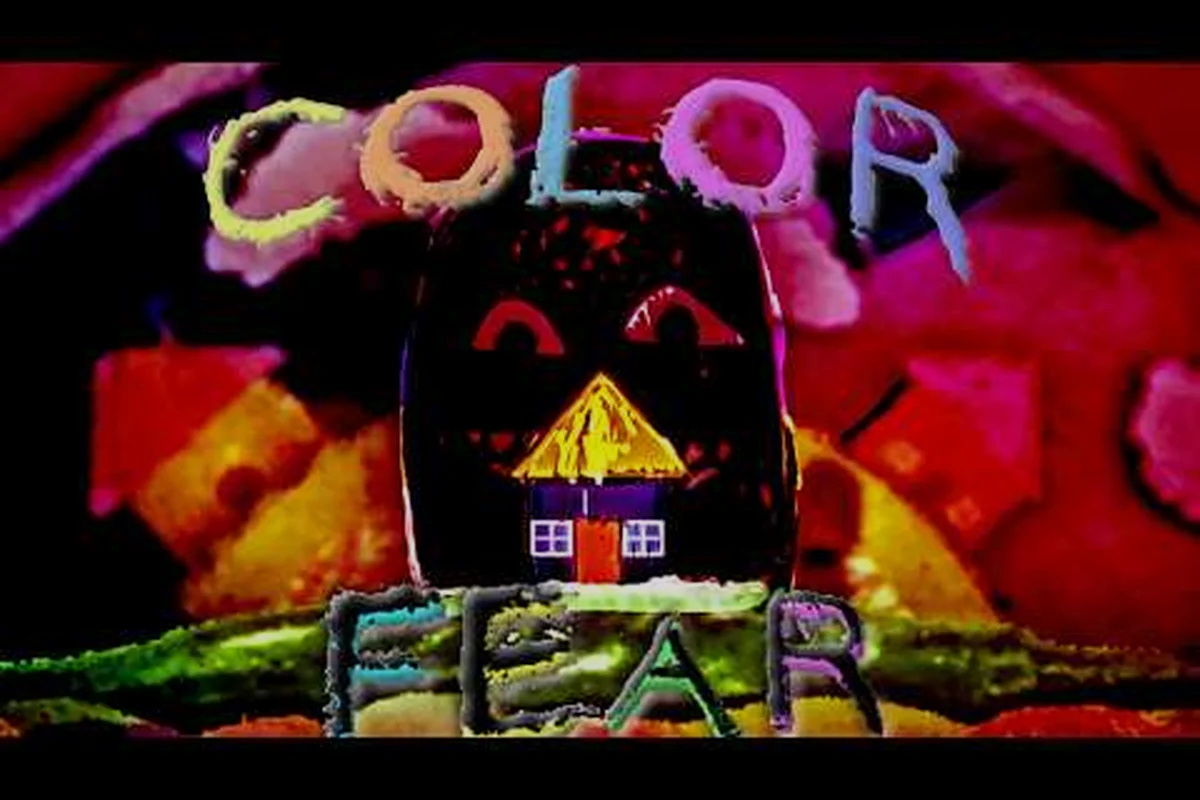
Color Fear color symbolism is not a cosmetic flourish bolted onto a children's coloring show; it is the engine that drives the analog TV horror at the heart of West View's Steam title. Each night pulls a new hue from a fixed rotation, and that single color decides what hunts the cast inside the house. Read the rotation wrong and you treat the experience like a cozy mini-game, when it is actually a guided psychological horror trial where color is the only language the show uses to talk to you.
What the Color Rotation Actually Means in Color Fear
The Color Fun Coloring Show asks viewers to find a color in the house, but in Color Fear the rotation behaves like a weekly broadcast schedule. Seven core hues, each tied to a different intruder behavior pattern, cycle through the run. A first-time player usually notices only the visual shift on the TV, while the threat model quietly reshapes itself behind the wallpaper.
The rotation is not random. West View confirmed via the Color Fear on Steam store page that the show simulates a broadcast loop, and the Steam API metadata lists the title as Action/Adventure/Indie with single-player Steam Achievements, which means the rotation is designed to be replayed, not watched once.
How the Seven-Night Color Loop Works
The loop is a fixed sequence disguised as randomness. Every session begins on Night 1 with the same opening color, and each cleared night advances the channel by one slot. Missing a clue or quitting mid-run does not reset the rotation, it only reschedules the next broadcast.
| Night | Color | Intruder Archetype | Visual Cue on TV |
|---|---|---|---|
| 1 | Yellow | Scout | Soft glow, no static |
| 2 | Blue | Latcher | Cold tint, hum loop |
| 3 | Green | Herder | Static edges, low drone |
| 4 | Orange | Mimic | Flicker frames, color bleed |
| 5 | Purple | Stalker | Heavy scanlines, high buzz |
| 6 | Red | Eliminator | Full red wash, harsh beep |
| 7 | Black | The Show | Screen goes dark, then over-bright |
The sequence matters because each color carries a rule, not just a vibe. Yellow Scouts only watch and report. Blue Latchers lock doors and windows, so the player must keep an exit path open. Green Herders push the cast toward the center of the house, which sounds safe until you realize the center is also where the TV is. Orange Mimics copy a room's wallpaper and ambush from inside it, while Purple Stalkers drain sanity meters on sight. Night 6 is where the red color meaning becomes lethal, and Night 7 is where color symbolism collapses into pure analog TV horror.
Color Fear Red Color Meaning: Why Night 6 Breaks the Format
The color fear red color meaning is the single most important symbol in the entire rotation, and it is the one most first-time players misunderstand. They assume red means danger in the usual way, a warning to be careful, maybe a slightly faster enemy. In Color Fear, red is not a warning color. It is a kill color, and the show uses it to designate the night where the house is no longer survivable in the conventional sense.
On Night 6, the intruder is tagged the Eliminator, and its behavior diverges from every prior night. Earlier colors are content to herd, mimic, or drain. The Eliminator removes cast members from the broadcast. According to the developer description shared on the Color Fear Steam page, the show eliminates cast members on schedule, and the red wash on the TV is the visual confirmation that the schedule has been triggered. The color is not a hint; it is an execution order.
Reading the Red Wash as a Warning Message
Color fear the warning message is layered into the broadcast itself, and red is the loudest layer. The TV does not flash a text alert. It saturates the screen, overlays a harsh beep on the audio loop, and removes the Peach puppet from the frame. Three simultaneous signals tell the player that the rules of the previous five nights no longer apply.
| Signal | Pre-Red Nights | Night 6 (Red) |
|---|---|---|
| Screen saturation | Tinted, partial | Full red wash |
| Audio loop | Soft hum, music box | Harsh repeating beep |
| Peach puppet | Visible, hosting | Removed from frame |
| Intruder behavior | Capture, herd, drain | Direct elimination |
| Player objective | Survive until dawn | Outlast the broadcast |
Players who learn the red meaning early use the night differently. Instead of trying to clear it like a standard survival round, they treat it as a hiding simulator: shut every door, cut every light, and let the show edit the cast down to whoever was already out of frame. The color is communicating that the player's job is to be invisible, not clever.
Color Fear Psychological Horror: Why the Effect Lingers
The color fear psychological horror is not delivered by jumpscares or gore. It is delivered by the after playing effect that the store page itself warns about. West View's copy explicitly states that players feel like they are still in Color Fear after playing, and that line is not marketing. It is a confession about how the symbolism is engineered.
Color fear after playing effect has three layers. First, the rotation imprints a Pavlovian response to specific hues. Yellow becomes associated with safety, blue with locked doors, green with being herded, and red with elimination. A player who finishes a run will notice that a real-world yellow Post-it no longer reads as neutral. Second, the analog TV framing primes the brain to expect a broadcast. Static, scanlines, and the hum loop replicate the look of late-night UHF stations, and the brain keeps scanning for the next episode even after the monitor is off. Third, the show's "find a color in the house" framing turns the player's real environment into a hunting ground. Every room becomes a possible hiding spot, every shadow a possible Mimic.
Mapping Colors to Real-World Psychological Triggers
The color fear analog tv horror is built on a tight set of associations that the show drills into the player across a single playthrough.
| Color | In-Game Threat | Real-World Trigger the Game Hijacks |
|---|---|---|
| Yellow | Scout | Curiosity, school-bus association, daytime safety |
| Blue | Latcher | Cold, isolation, locked-room anxiety |
| Green | Herder | Nature, calm, false sense of pastoral safety |
| Orange | Mimic | Warmth, firelight, the comfort of a lit room |
| Purple | Stalker | Nighttime, dreams, the liminal hour before sleep |
| Red | Eliminator | Stop signs, emergency lights, blood, broadcast kill signals |
| Black | The Show | TV static, signal loss, the "off" state that is never truly off |
The genius of the design is that every color pairs a benign cultural association with a lethal in-game one. Orange should feel safe because it is the color of living-room lamps, but in Color Fear orange is the Mimic night, when the wallpaper itself becomes a predator. The player learns to distrust comfort, and that lesson is what carries over into the after playing effect.
How Color Fear Analog TV Horror Borrows From the Broadcast Format
Color fear analog tv horror is not a backdrop; it is a structural choice. The game wraps every night inside a fake TV broadcast because the broadcast format is the only medium that can deliver color symbolism without breaking the fourth wall. A book can describe a color, a movie can show one, but a TV show interrupts itself to insist you are looking at a color, and that interruption is what Color Fear weaponizes.
The official Color Fear trailer by West View leans entirely on the broadcast frame. There is no HUD, no protagonist model, no dialogue. The trailer is a stack of TV screens, each one cycling through the seven colors while a children's-show host named Peach stands at the edge of the frame and smiles. The Steam Next Fest demo, shown in the Steam Next Fest official trailer, doubles down on this by placing the player inside the house while the show plays on a CRT in the corner. The show is always broadcasting, even when no one is watching.
Why the House Is Designed Like a TV Set
The randomized house layouts are not procedural filler. They are stage sets. Every room has a TV in it, every TV is tuned to the same channel, and every channel is locked to the night's color. The architecture is built to maximize the analog horror effect: long sightlines down hallways lit by the TV glow, thin walls that carry the audio loop into every room, and doors that rattle in time with the broadcast's beep. A player who tries to hide in a bathroom still hears the show, still sees its color bleeding under the door, and still knows the intruder is reading the same broadcast.
| House Element | Broadcast Purpose |
|---|---|
| CRT in every room | Ensures the color is always visible |
| Thin walls | Carries the audio loop as ambient dread |
| Long hallways | Turns the TV glow into a depth cue |
| Rattling doors | Synchronizes player panic to the broadcast beep |
| Randomized layout | Forces the player to re-learn the set every run |
The house is the show, the show is the color, and the color is the intruder. Strip any one of those layers and the analog TV horror collapses into a standard stealth game. Keep all three and the player cannot tell where the broadcast ends and the house begins, which is exactly the disorientation the developer is selling.
The Hidden Meaning Behind the Color Cycle
Color fear hidden meaning sits underneath the survival loop, and it is the reason the title keeps showing up in lore discussions rather than guides. The seven-color cycle is not a gameplay mechanic dressed in symbolism. It is the symbolism, and the gameplay is what falls out of it.
The hidden meaning operates on three readings, and the player can stop at whichever layer feels comfortable. The first reading is literal: a children's show has been weaponized into a nightly survival trial, and the color is the only way the show can communicate with the cast. The second reading is meta: the show is a metaphor for media consumption itself, and the colors represent the emotional states a broadcaster cycles a viewer through. Yellow curiosity, blue anxiety, green calm, orange comfort, purple dreams, red violence, black silence. The third reading is the one most community discussions settle on, and it ties directly into the broader Color Fear story explained thread: the show is a controlled environment, the house is a set, and the colors are the lighting cues the showrunner uses to script the cast's behavior.
Why the Blackout on Night 7 Is the Real Climax
Night 7 is not a boss fight. The screen goes dark, the audio cuts, and the player is left in a house lit only by the CRT's standby glow. The color black is the absence of color, and in the rotation it signals that the show has stopped pretending to be a children's program. The hidden meaning here is that black is what was behind every other color, the silent operator that only reveals itself once the rotation has run its course.
Players who have already cleared the run often revisit Night 7 looking for the symbol the show was trying to teach them. The most common community reading, summarized in fan discussions of the Color Fear hidden secrets breakdown, is that black represents the audience. The show broadcasts to someone, and the someone who has been watching all seven nights is the player. The house, the cast, and the rotation are all content. The viewer is the only thing the show cannot color, which is why the final frame is a blackout instead of a final hue.
Putting It Together: Reading the Next Broadcast
The next time the Color Fun Coloring Show asks you to find a color in the house, the request is a trap and a lesson at the same time. The color is the intruder, the intruder is the broadcast, the broadcast is the show, and the show is watching you read this sentence. Color fear color symbolism is the rare indie horror design that holds up under any layer you peel it back to: literal threat, media metaphor, or audience confession.
The practical takeaway is simple. Treat yellow as a tutorial, blue and green as puzzles, orange and purple as paranoia drills, red as a stealth round where your only job is to not be edited out, and black as the moment the show finally says your name. The seven nights are a broadcast schedule, and the Color Fear story summary community has already mapped the channel. Tune in once, and the rotation imprints itself on the way you read every room afterward.
Frequently Asked Questions
What do the colors mean in Color Fear?
Each of the seven colors in the Color Fear rotation is tied to a specific intruder archetype, from the Yellow Scout on Night 1 to the Red Eliminator on Night 6 and the Black Show on Night 7. The color is not cosmetic; it dictates enemy behavior, audio cues, and the player's survival objective for that night. Reading the rotation correctly is the only way to clear the broadcast.
Why is red the most dangerous color in Color Fear?
The red color meaning in Color Fear is tied to the Eliminator, the only intruder archetype that permanently removes cast members from the run. Earlier nights use color to herd, mimic, or drain, but red is the night the show executes its schedule. Players who understand the red meaning treat Night 6 as a hiding round rather than a combat round, because the objective is to avoid being edited out of the broadcast.
What is the warning message in Color Fear?
The warning message is delivered through the TV broadcast itself, not through on-screen text. The show layers visual saturation, audio loops, and the removal of the Peach puppet to signal a rule change. Red saturation plus a harsh beep plus an empty hosting frame is the show's way of telling the player that the previous five nights' survival rules no longer apply and the house is now a kill set.
Why does Color Fear feel like it stays with you after playing?
The after playing effect comes from the show hijacking everyday color associations and pairing them with lethal in-game threats. Yellow gets linked to scouting, blue to locked doors, green to being herded, orange to the Mimic, purple to the Stalker, and red to elimination. After a full run the brain keeps scanning real environments for those color triggers, which is the psychological horror the developer designed the rotation to deliver.
Is Color Fear an analog TV horror game?
Yes, Color Fear is built explicitly as an analog TV horror experience. Every room contains a CRT tuned to the same broadcast, the house is staged like a TV set, and the show interrupts itself to insist the player is watching a color. The analog framing is what lets the color symbolism land, because the TV format is the only medium that can deliver a color as a threat without breaking the fourth wall.